Ines Hughes · 7 October 2026
Unseen Shifts in Streambed Microbial Ecosystems After Intense Wildfires
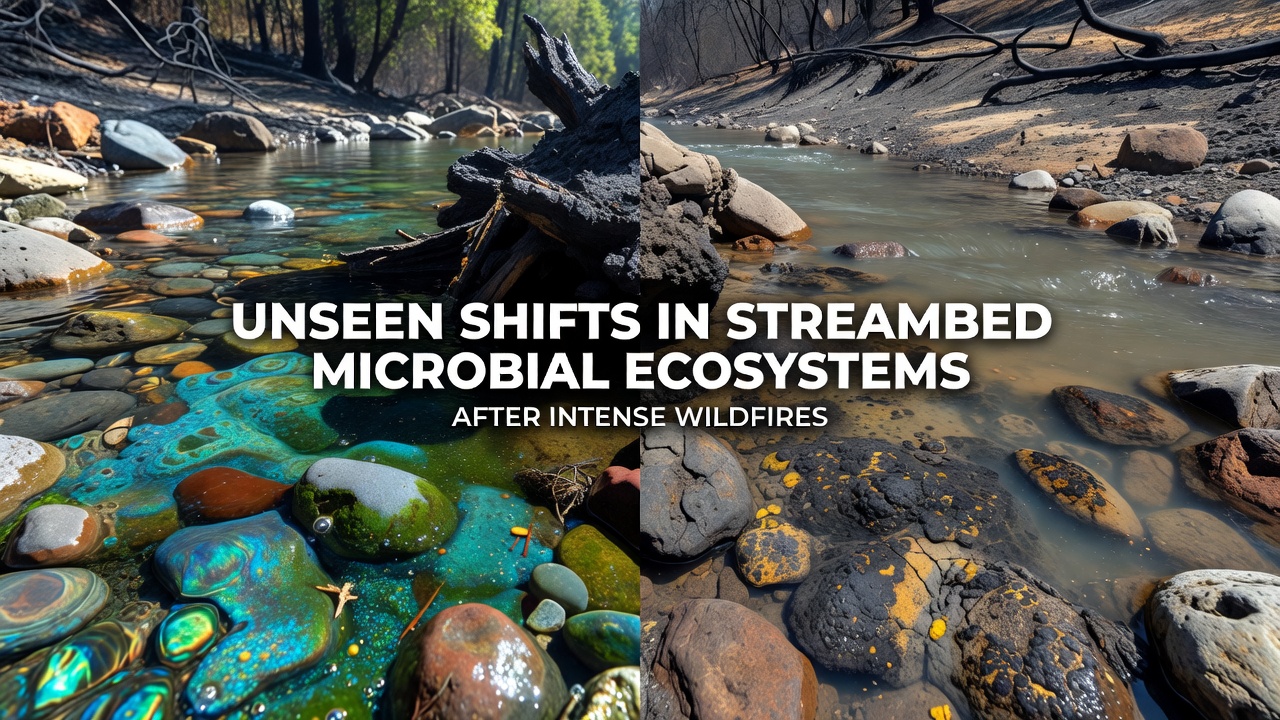
Intense wildfires deposit ash, charred debris, and heated sediments into stream channels, which alters water chemistry and physical conditions in ways that reshape microbial communities living on and within streambed substrates. Researchers have documented these changes through repeated sampling in fire-affected watersheds across multiple continents, where shifts in bacterial and fungal populations emerge within weeks of fire containment and persist for months or years afterward. Data collected through October 2026 shows elevated nutrient pulses from ash leachate coinciding with declines in oxygen-sensitive taxa and increases in opportunistic species that tolerate high turbidity and altered pH levels.
Immediate Chemical and Physical Changes in Streambeds
Wildfire runoff carries fine ash particles that settle on streambed surfaces, raising pH and releasing phosphorus, nitrogen, and trace metals that serve as new substrates for microbial growth. Observers note that these inputs often reduce dissolved oxygen near the sediment-water interface because organic matter decomposition accelerates, creating localized anoxic zones where only anaerobic bacteria thrive. Studies from the United States Geological Survey indicate that sediment temperatures can remain elevated for days after fire passage, killing heat-sensitive microbes while selecting for thermotolerant strains that colonize freshly deposited material.
Channel morphology also shifts when post-fire debris flows bury existing gravel and cobble beds under layers of fine sediment, which limits oxygen diffusion and changes the three-dimensional habitat available to biofilm communities. Those who've monitored these sites report that interstitial spaces once occupied by diverse periphyton communities become dominated by a narrower set of taxa adapted to low-oxygen, high-nutrient conditions. The resulting simplification of microbial food webs affects nutrient cycling rates and the breakdown of organic matter that supports higher trophic levels downstream.
Alterations in Microbial Community Composition
Genetic sequencing of streambed samples collected before and after major fires reveals rapid turnover in bacterial phyla, with Proteobacteria and Firmicutes often increasing in relative abundance while certain Actinobacteria and Cyanobacteria decline. Fungal communities shift as well, because wildfire-derived charcoal provides new surfaces for colonization by species that degrade complex carbon compounds. Research indicates these compositional changes vary with burn severity, proximity to the stream channel, and the timing of the first post-fire rains that deliver ash loads.
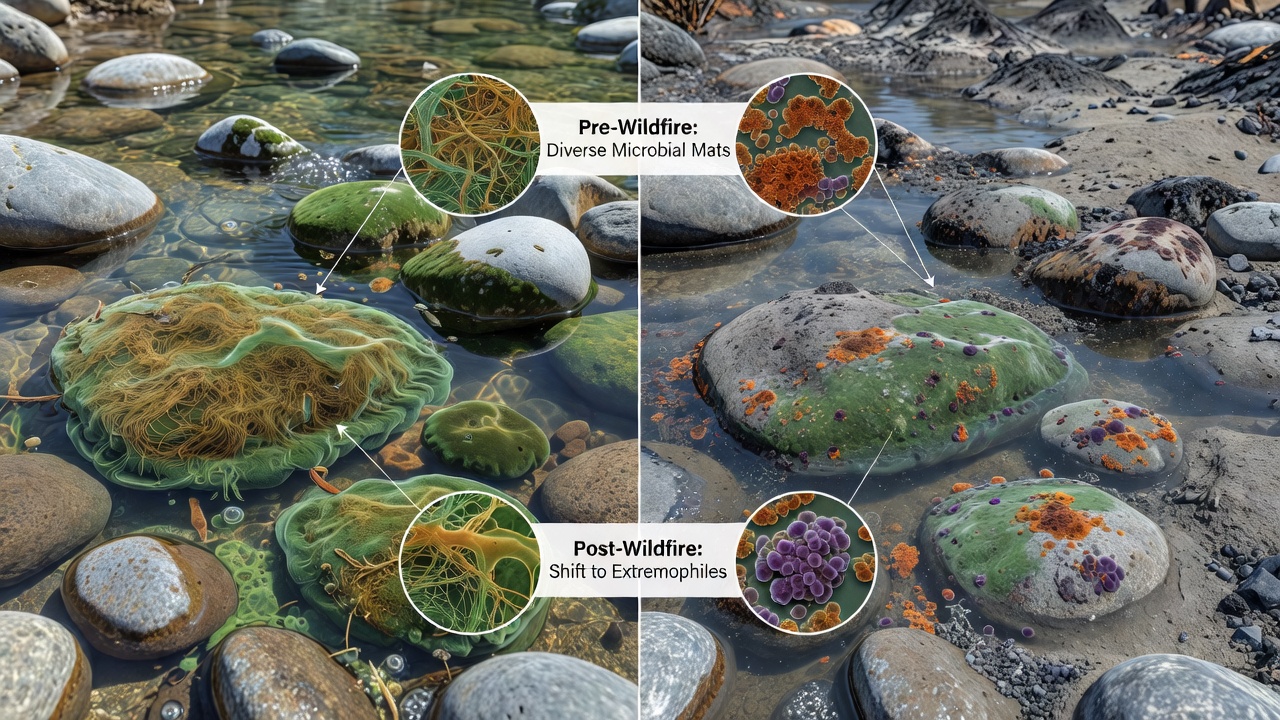
Functional gene analyses show corresponding adjustments in metabolic pathways, including elevated expression of genes involved in denitrification and phosphorus solubilization in ash-affected reaches. One study revealed that microbial biomass sometimes rebounds within months, yet the recovered communities perform different biogeochemical roles than pre-fire assemblages. Australian research institutions tracking similar events in eucalypt-dominated catchments have recorded parallel patterns, where fire-induced changes in dissolved organic carbon quality favor different fungal decomposers than those dominant in unburned reference streams.
Recovery Trajectories and Influencing Factors
Recovery of pre-fire microbial diversity depends on the rate of fine-sediment export, the return of riparian vegetation that stabilizes banks, and the frequency of subsequent high-flow events that rework streambed material. Sites with intact upstream refugia often see faster recolonization by sensitive taxa once water quality improves, whereas heavily scoured channels exhibit prolonged dominance by disturbance-tolerant microbes. European Environment Agency reports on Mediterranean watersheds document that repeated fires within a decade can lock some streambeds into altered states where legacy ash layers continue to influence microbial activity long after vegetation has regrown on hillslopes.
Seasonal hydrology plays a decisive role because winter rains or snowmelt can flush accumulated sediments and reset conditions, while prolonged low-flow periods allow ash-derived nutrients to accumulate and sustain modified communities. Those monitoring long-term plots note that microbial resilience also correlates with the presence of large woody debris that creates heterogeneous flow environments and protects patches of older biofilm from scouring.
Conclusion
Streambed microbial ecosystems register wildfire impacts through measurable shifts in community structure, metabolic function, and spatial distribution that unfold over weeks to years. Continued monitoring programs supply the data needed to distinguish temporary responses from persistent state changes, while comparative studies across regions clarify how climate, geology, and land management interact with fire severity to shape outcomes. The patterns emerging from these observations inform models that predict how future wildfire regimes may alter nutrient processing and ecosystem stability in fire-prone landscapes.